The greatest tragedy of the modern era isn’t that God has stopped speaking; it’s that we have forgotten how to listen. We live in a world of high-definition noise—social media distractions, political shouting, and the relentless internal voices of our own anxieties. Yet, deep within our heart there is a still small voice ready to speak with us. The scripture says, My sheep hear my voice, and I know them, and they follow me John 10:27
You discern God’s voice by relationship and not by formula. Sheep know the Shepherd’s voice because they have walked with Him. You cannot download intimacy. Spend time in the Word until the Word starts speaking back. Fast until your spirit is louder than your stomach. Worship until your opinions bow. Then when He speaks, your spirit will leap like John in the womb.
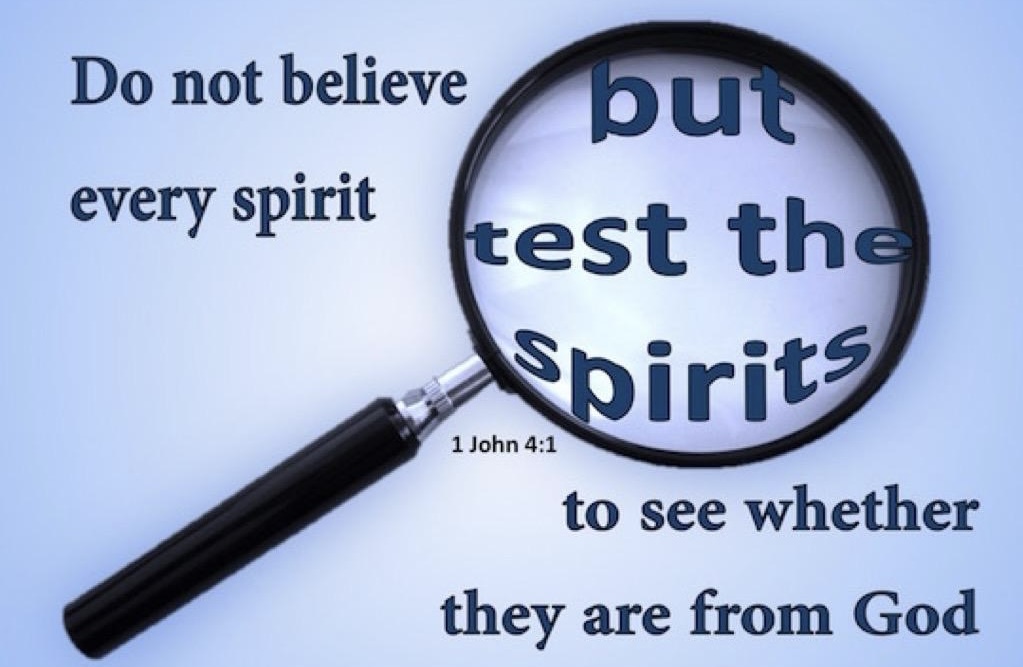
Test every voice with peace. Colossians 3:15 says let the peace of God rule like an umpire. If confusion stays, God did not speak. He is not the author of it. His voice carries weight, clarity, and a holy pull toward Jesus. Even correction feels like love. When you know Him, you will know His tone.
To understand how God speaks, we must first understand the nature of His voice. God rarely shouts. In the biblical account of the prophet Elijah, God wasn’t in the wind, the earthquake, or the fire. He was in the “still, small voice”—a phrase that carries the weight of a “sheer silence” (1 Kings 19:12). This divine modesty is intentional. If God shouted, we would obey out of terror; because He whispers, we must lean in out of love.
Think of a mother in a crowded playground; she is tuned to the specific frequency of her child’s cry. Hearing God is less about the volume and more about the intimacy of the connection. His voice often feels like a “sanctified intuition”—a sudden thought that doesn’t feel like your own, a prompt to call a friend, or a wave of peace that defies a chaotic situation.
Consider the testimony of a man named David, who was driving through a rural highway at 2:00 AM, exhausted and spiralling into depression. He felt a tangible presence and a clear internal command: “Pull over at the next mile marker and wait.” Logically, it was insane—a dark road, no cell service, and a freezing night—but the voice was too authoritative to ignore and he pulled over. Ten minutes of silence passed. He felt foolish.
Then, he saw a faint light in a ditch fifty yards ahead. He found a car that had flipped, hidden by tall grass, with a woman pinned inside and bleeding out. She had been praying for God to send someone. David didn’t just hear a direction; he heard the heartbeat of God, who was so micro-focused on one dying girl that He interrupted a man’s journey to facilitate a rescue. This is the radical nature of hearing God: it turns you into a co-conspirator in heaven’s rescue missions.
God is the Great Artist, and He isn’t limited to words; He is a multi-modal communicator who speaks through every available channel of the human experience. The primary source is always Scripture. If you want to recognise His voice, you must study His “accent” in the Bible. His spoken word will never contradict His written Word. If the thought in your head doesn’t vibrate at the same frequency as the Gospel, it isn’t Him.
Alongside this is the “Language of Peace.” The Apostle Paul speaks of a “peace of God, which surpasses all understanding” (Philippians 4:7). This peace acts as a guard. When making a decision, a subtle unrest or “check” in your spirit is often the Holy Spirit saying, “Not this way,” while a deep, settled peace in a storm is His loudest shout. It is a peace that exists even when the facts are screaming otherwise.
God also speaks through the language of dreams and visions, often waiting until our conscious, cynical minds are asleep to bypass our intellectual defences. Consider Sarah, a woman who grew up believing she was a cosmic mistake. She dreamt of a man with eyes like liquid light who handed her a book and whispered a name she had never heard: “Hephzibah.”
Sarah wasn’t a Christian, but days later, she wandered into a bookstore, found a Bible, and opened it to Isaiah 62:4: “No longer will they call you Deserted… but you will be called Hephzibah, for the Lord will take delight in you.” She hadn’t just read a verse; she had been “heard” by the Great I AM. The name Hephzibah means “My delight is in her.” That is the moment information becomes transformation, proving God knows our specific trauma and addresses it with specific love.
The testimony of George Müller, who cared for 3,000 orphans in the 1800s, remains one of the most mindblowing examples of this lifestyle. One morning, with no food and empty bowls, Müller sat the children down. He heard God say, “Give thanks for the food.” He thanked God for what they were going to eat, despite the empty bowls before him.
Moments after he said “Amen,” a baker knocked, saying God had moved him to bake bread at 2:00 AM because he knew the orphans would be hungry. Then, a milkman’s wagon broke down directly in front of the orphanage, and he gave all the milk to the children for free. This is the reward of discerning God’s voice. When we obey the voice, the laws of biology and economics bow to the Word of the King.
A CATHEDRAL OF SILENCE

If we want to hear God, we must build a “cathedral of silence” in our lives. You cannot hear a whisper if you are always shouting. This requires a posture of surrender, where the answer to God’s lead is already “Yes” before He even speaks. We must move away from “utilitarian” prayer—using God for our own ends—and instead ask, “Lord, what is on Your heart?”
When we journal the fragments—a song, a stranger’s comment, a verse that seems to leap off the page—we begin to see a tapestry. We realise He has been weaving a conversation all along, proving that the Creator of the universe doesn’t need an assistant; He desires a child. He is not looking for employees to give orders to, but for friends to share His heart with.
Discerning the voice of God is a skill learned in the “secret place.” Many ask, “How do I know it’s God and not my own imagination?” The voice of the “self” usually centres on self-preservation, ego, or immediate gratification. The voice of the enemy usually brings condemnation, shame, and confusion.
The voice of God brings conviction that leads to hope, clarity that leads to peace, and commands that often require us to step out in faith and courage. If a thought prompts you to do something selfless, kind, or sacrificial that you wouldn’t normally do, it’s a safe bet that it’s the Spirit. God’s voice has a “weight” to it—a spiritual gravity that lingers long after the thought has passed.
In this school of discernment, the scripture also teaches us that God speaks through others. However, we must be careful. The word of a person must always be weighed against the peace in our own spirit and the truth of the Word. There are times when God will use a total stranger to speak a word that unlocks a door in your heart you didn’t even know was locked.
I remember a woman who was contemplating suicide. She was standing on a bridge, and a man walking a dog stopped, looked her in the eyes, and said, “God told me to tell you that the harvest is coming, and you need to be there to see it.” He didn’t know her, but he heard the Voice. That single sentence changed her entire destiny.
Why does God speak? He speaks because He is a Father, and the essence of Fatherhood is communication. The most profound revelation isn’t that God can find car accidents or provide bread; it is that He likes you. Every time He speaks, He is saying, “I see you. I know your name. I am with you.”
When you hear Him, you realise you are a “thought of God” made flesh. His voice is primarily the voice of a Lover wooing His beloved, calling us out of our isolation and into His marvellous light. He speaks to build a relationship, not just to give a roadmap. If He gave us the whole map at once, we wouldn’t need to stay close to Him for the next turn.
However, we must address the “silent” seasons. Many people give up when God seems quiet, assuming they’ve failed or that God has withdrawn. But insightful spirituality teaches that silence is a form of communication. In a healthy marriage, a couple can sit in a room for an hour without words, yet be in profound communion.
Silence is often God’s way of moving us past the “gift” of His words to the “glory” of His presence. It is the “night of the soul” that purifies our hearing. If you aren’t hearing a new word, stand on the last word He gave you. God’s silence is not His absence; it is His confidence in you. He is teaching you to trust His character even when you can’t hear His voice.
The invitation stands for every person today. In the very room where you are sitting, the Spirit of God is present. He is not a distant deity; He is closer than your own breath. Hearing God’s voice will ruin your “normal” life in the best possible way.
It will take you on adventures you didn’t sign up for and give you a peace that makes no sense to the world. Stop trying to “figure out” your life and start listening to the One who designed it. Put down the distractions and offer the prayer of Samuel: “Speak, Lord, for your servant is listening” (1 Samuel 3:9).
Wait past the boredom and the wandering thoughts until the silence begins to breathe. One single word from His mouth can do more in a second than a lifetime of your own effort. He is speaking right now, calling you by name and telling you that the best parts of your story haven’t been written yet.
The Great Conversation is happening, and the Creator of the universe is waiting for you to join in. The whisper is in the room. The question is: will you be still enough to hear it? If you will do this I decree and declare that every challenging and confusing situation in your life will be turned into joy, peace, good health and prosperity. You will discern and hear God’s voice more than ever before in Jesus’ name.
May the Lord bless you and keep you; may the Lord make His face shine upon you and be gracious to you. May the Lord lift His countenance upon you and give you peace.